

The last word
We keep asking: when will this violence end? But the Gospel asks a different question. What will you choose when fear rises?

Scripture: Psalm 31: 1-5, 15-16; John 14: 1-14
August 20, 2013 started out like any other Tuesday for Antoinette Tuff.
She woke up, got ready, climbed into her car and headed to her job at Ronald E. McNair Discovery Learning Academy that morning.
But that Tuesday would not be like any other.
Shortly after the first bell rang, a man charged into the school armed with an AK-47 and hundreds of rounds of ammunition. He came straight to the front office.
Antoinette saw the gun.
She also saw a man pushed beyond the edge. She knew immediately what kind of danger they were in.
She could have hidden.
She could have let fear take over, but Antoinette chose a different way.
“I just started talking to him,” she said.
Not because she had a plan but because she saw that he was a person in distress.
In that moment, Antoinette made a decision. She chose not to see the man pointing a gun at her chest as an enemy. She chose to see him as a human being.
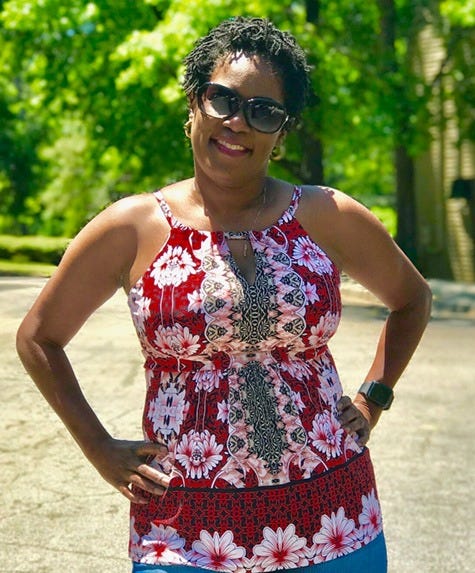
Our instinct to match violence with violence is natural, and runs deep. Humans are one of the most cooperative species on earth. We are also one of the most dangerous.
When we feel threatened, our biology, our conditioning, everything in us says: act first. Strike back. Protect yourself. Stand your ground.
When fear rises, our bodies and our minds push us toward reaction. But the God who created us calls us to bring that impulse to something greater than our control. God calls us not into retaliation but into God’s presence.
Psalm 35 is a prayer from someone under threat, asking God to act against enemies. It is a Psalm of King David, who knew what it was like to be hunted, slandered, surrounded by threats. And in John’s Gospel, Jesus faces arrest, trial, and execution by the state. Our scripture this morning comes from two lives under threat, and neither is told to take up arms. When faced with violence, King David and Jesus bring their violent impulses to God.
Human beings are hardwired to place added emphasis on threats we perceive. Neuroscientists tell us the human brain treats threats more seriously than they often are. We are predisposed to predict the worst, and to expect the worst from others. But the Biblical message compels us to keep our instinct in check, by taking a beat to bring God our violent reactions.
“Into your hand I commit my spirit,” David says.
“Into your hand I commit my spirit,” Jesus prays from the cross.
The parallel is not an accident. It holds the tension between what we are wired to do and what we are called to do. These words surrender human impulsivity and control. The psalm does not deny the impulse toward violence. But David and Jesus refuse to let violence have the final word.
Trust is not something that comes after the crisis. Trust is the decision we bring to God in the middle of the crisis: when we feel threatened, when we are afraid, when we are convinced that more force will make us safe. God’s expectation is to bring the fear behind violence and the assurance of control we discover in violence to God.
Jesus says, “Do not let your hearts be troubled.”
Not because there is no danger.
Not because the world has suddenly become safe.
But because, “In my Father’s house there are many dwelling places.” This is not just a promise about someday. It is a declaration about what is already true. There is a place for us. We are already held. And when we know that—when we trust that our lives are already in God’s hands—that’s when we are no longer driven by fear. We are no longer forced to react. We are no longer bound to answer violence with violence because violence loses its claim on us.
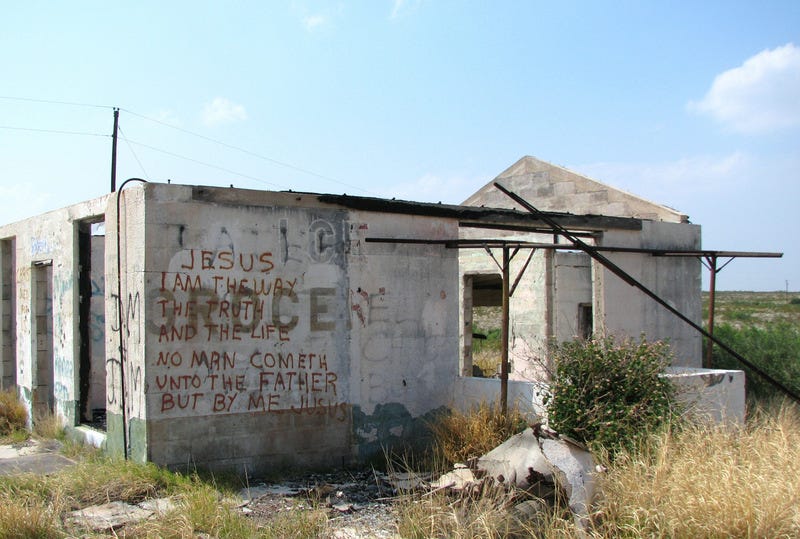
When the shooter burst through the door and into her office, Antoinette Tuff did not have time to analyze policy. She did not have time to debate strategy. She had a moment: a single, terrifying moment to decide what kind of human being she would be.
She could meet fear with fear.
She could let violent instinct determine her response.
With our track record of killing one another, even in school buildings, she could have placed her faith in carrying a gun for a situation just like this.
Or—she could trust that her life was already in God’s hands.
And because she chose trust, because she chose to see, because she refused to let fear have the final word, people who otherwise may have been killed, lived instead.
With one hand clutching a phone connected to a 9-1-1 dispatcher and her other hand raised in surrender, Antoinette spoke to a man who could have snuffed out her life with the pull of a trigger. She spoke to a man hiding behind a mask of fear, and shame.
“We’re not gonna hate you, baby,” she told him.
“It’s gonna be alright, sweetie.”
“We all go through something in life.”
“I’ve been through a whole lot myself.”
She told him the truth about her own pain.
“My husband left me after 33 years… but I’m still here.”
And slowly, eventually, the man put the gun down.
We like to think we will never face a moment like Antoinette faced but we face versions of it all the time. Not always with a gun in the room but whenever we are afraid. Whenever we feel threatened. Whenever we are told that the only way to be safe is to harden ourselves, to arm ourselves, to stand our ground.
Even when guns aren’t aimed at us, the same question arises: what kind of human being will you be?
Scripture knows the pattern of our choices.
Kings build armies.
Nations stockpile weapons.
People trust in chariots and horses and the latest killing technology.
And still—peace does not come.
The problem is not a lack of power. The problem is where we place our trust.
If we believe our safety depends on force, we will always need more of it. But if our lives are already in God’s hands, we are free to choose another way.
A way that is honest with God about fear.
A way that refuses to let fear become violence.
A way that dares to see—even when it is hardest to see.
Antoinette Tuff did not stop violence with greater force.
She interrupted it with presence, with courage, and with trust. She trusted the human power to relate more than her ability to respond with force.
We face the same choice: in our homes, in our community, and in the ways we speak, respond, and live with one another.
Scripture records Israel’s wars—but it does not present war as the fulfillment of God’s will. It shows the limits, the ambiguity, and ultimately the failure of war and its violence to bring peace. The lie we tell ourselves that our guns will make us safe, the myth that a nation’s might is measured in its military strength, the fallacy of our faith in war to bring change all stem from the same root of sinfulness. It allows us to claim power over life and death. We become God.
Our obsessions with weaponry and rights keeps us from seeing the image of God in one another. When the rights we feel we have to enact violence overshadows God’s expectations for us to see one another in God’s image, we commit idolatry. We make weapons more important than peace.
The world will keep telling us that violence is the only language it understands. Every hammer blow that drove the nails into the cross echoes that belief. But the Gospel tells us something different.
We are already known by God.
We are already held.
And so is the person we fear, or that nation we fear.
That is the truth Antoinette Tuff trusted in that office. Not that the moment was safe but that her life, and even the life of the man in front of her, were already in God’s hands. And because she trusted that, Antoinette was free. Free to speak. Free to see. Free to refuse the violence that stood right in front of her.
By the time the police arrived, the turning point had already happened.
Inside that office, a conversation had begun.
And before anyone rushed in, before any force was used,
the man put the gun down.
He walked out unarmed.
The decisive moment didn’t belong to force. It belonged to a choice. We keep asking: when will this violence end? But the Gospel asks a different question.
What will you choose when fear rises?
What kind of human being will you be when you feel threatened?
Will you trust the fear that tells you to strike first?
Or will you trust the God who already holds your life?
Because if we are already held, then we are free.
Free to choose another way.
The question is not when this will end.
The question is whether violence will have the final word. Our choices - yours and mine - will answer it.