

Shout!
“Hosanna!” is not a happy chant for happy times. It is what people shout when suffering refuses to stay quiet.

Scripture: Psalm 118:1-2, 19-29; Matthew 21:1-11
I think all of us know what it’s like to hear shouts of protest, and to turn away. Or ignore it.
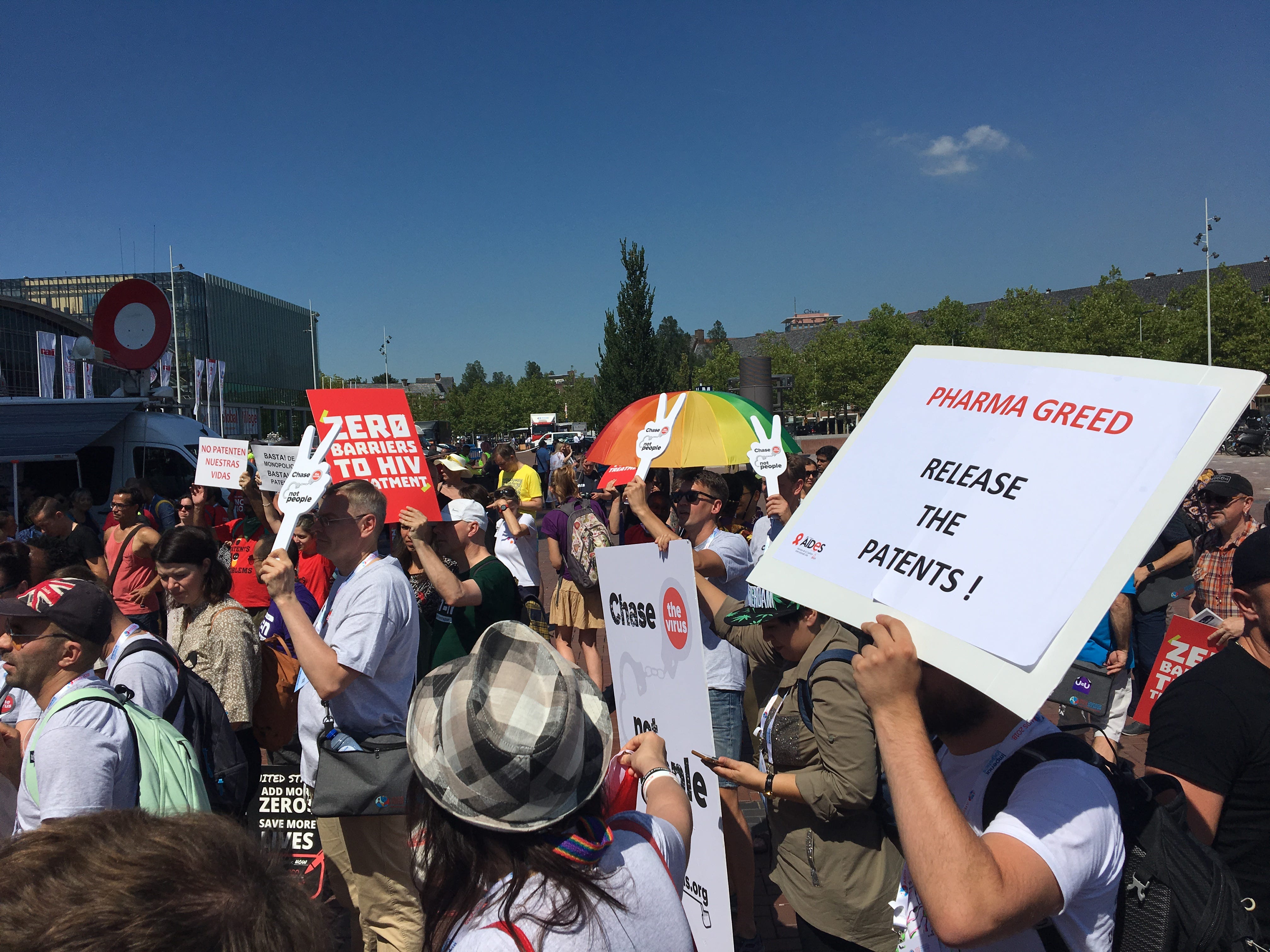
I’ll give you an example. We were sitting in the largest public health gathering on the planet. The International AIDS Conference in 2018 brought together doctors, public health specialists, academics, big pharma, diplomats, and celebrities. Elton John and Prince Harry shared a stage.
The public health agency I served had carved out a small space—couches and chairs—for conversation. A place where people could connect.
And then the shouting started.
“You’re killing us!” They chanted.
“Don’t let us die!”
Protestors pushed into the exhibit hall. A few pops cut through the noise—confetti and glitter bombs scattering across the red, groomed carpet. But the tension couldn’t be cleaned up. We couldn’t ignore it.
***
When Jesus entered the city, Jerusalem held a similar tension. Jesus arrives in Jerusalem at passover. This is when Jews gathered to celebrate God leading them out of bondage. It is the time when ancient Jews reflect on the state of tyranny under which they lived - a tradition still marked in Passover seders. It is a time when Jews turn to one another and ask, “God delivered us once. Why not again?”
That kind of hope for liberation was dangerous to the Roman Empire that ruled in Jesus’ day. By some accounts, Jerusalem swelled to several times its normal size for the Passover celebration. A massive influx of people remembering their liberation and filling the streets put the Romans on edge. Soldiers arrested or even killed rabble rousers on the spot. Pilate left his normal seat in Caesarea so that the iron fist of his rule would be immediate and visible in the occupied city of Jerusalem. It had become an annual scene of violence.
Jesus enters this city of tension, where an occupying army carts off any troublemakers who aren’t just killed outright.
Jesus stages a protest of His own.
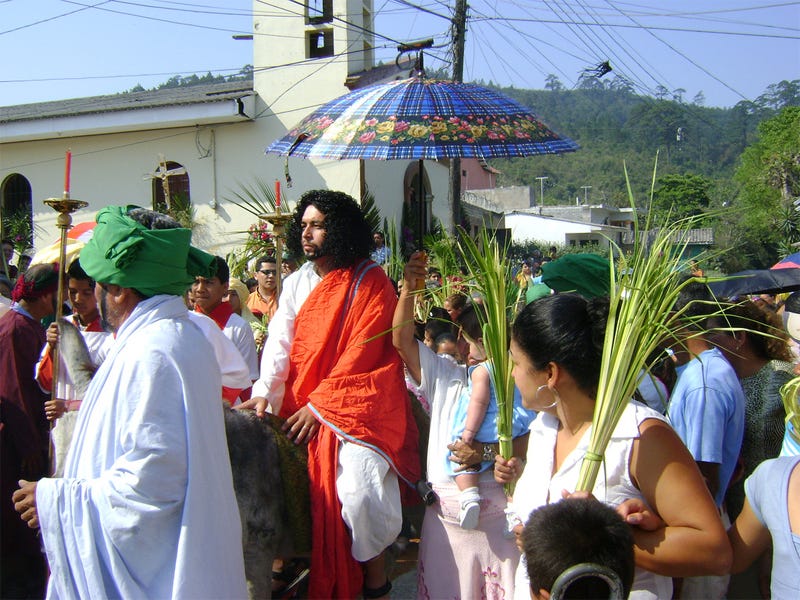
Not the kind where people shake their fists at Rome— but the kind that mocks the Empire using its own tools: a parade, a mounted leader, the language of victory.
He mocks the Empire by throwing a parade. He plays the role of a senior commander on a mount, soaking in the lauds and praise of victory.
The crowd catches on. They lay their coats on the ground like ancient citizens welcoming a king. And that’s when the chants of protest ring out.
“Hosanna.”
It’s a word from Psalm 118.
It means: “Save us, we pray.”
“Hosanna,” they call from the sides of the street, making way for a savior on a borrowed donkey or two.
***
We dress up this day so it aligns with the glory and splendor of Easter - the day of hope where we are assured love conquers death. But we fail following Jesus if we reduce Palm Sunday to that nice time where we wave palms and shout “Hosanna” to open worship.
“Hosanna” came as a response to suffering. “Save us, we pray” is a plea for deliverance. Israel had been delivered before. And yet, every time, something went wrong. The Temple bent toward greed. Power turned inward. The vulnerable were pushed aside. Jubilee was forgotten.
The lessons never seem to stick with the people of God.
“Hosanna!” is not a happy chant for happy times. It is what people shout when suffering refuses to stay quiet.
Jesus has spent His time restoring people and communities to wholeness.
Showing us how to build God’s kindom—here and now.
But we continue to make choices that do not advance that kindom.
We place our hopes in national identity while forgetting Jesus was legally executed by a national government.
We continue to blame poverty on poor people instead of the choices we make that deny them the same support we enjoy.
We fail to welcome the stranger. We only heal the sick if they work and can afford health care. We fill prisons while failing to visit the prisoner.
We are our own worst undoing. Jesus shows us the way out of it, but we fail to follow along. And so Jesus leads a protest in a spectacle that draws a crowd.
“Hosanna!” The people shout. “God save us, we pray!” It is an intentional interruption in a time when attention was turned elsewhere.
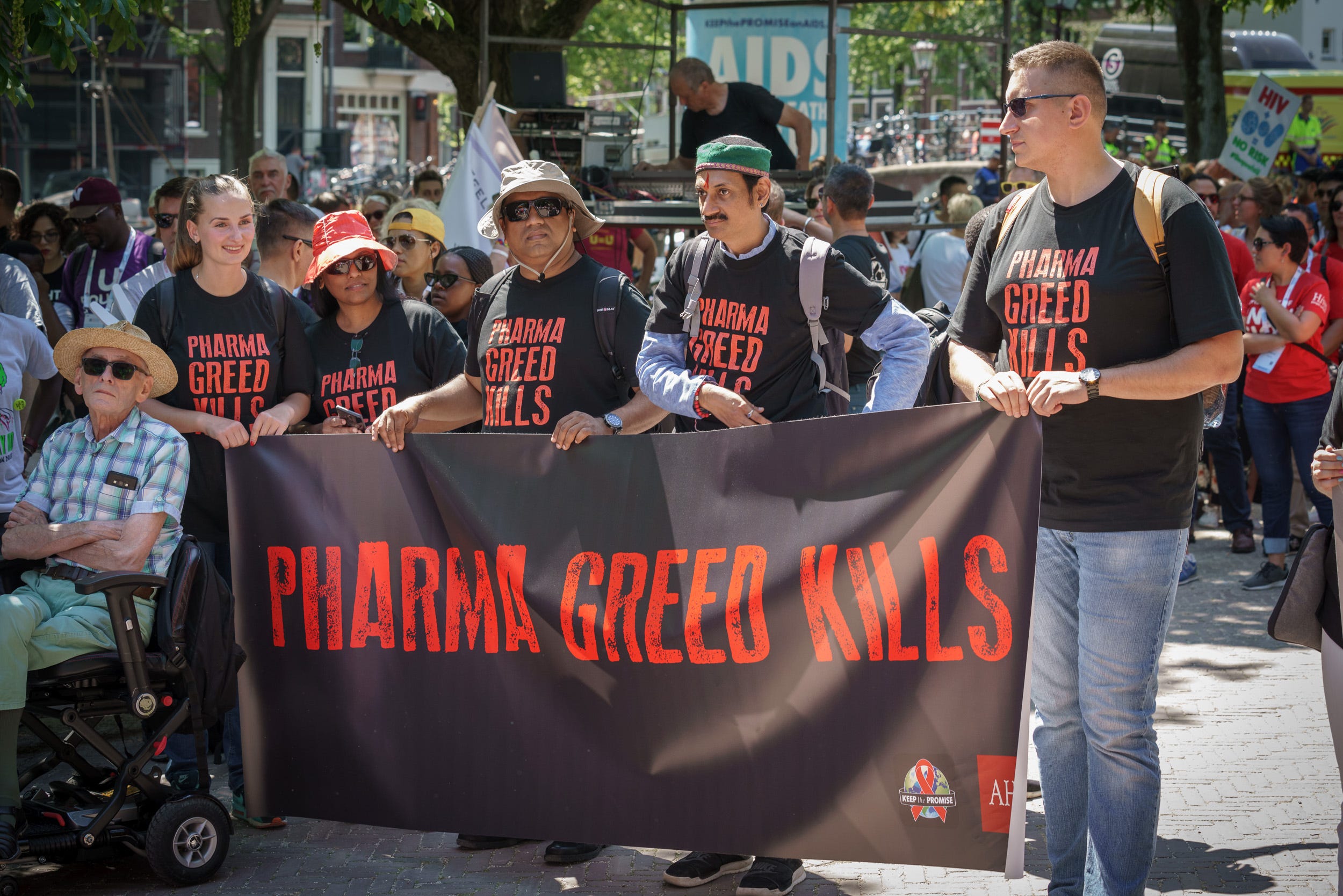
The shouts of protest we heard in Amsterdam were an interruption in a multi-million dollar event celebrating the advances made in one of the great plagues of our times. It would have been easy to blow them off. But watching ordinary people from African, Asian and Latin American countries raise their voices to multi-million dollar companies commanded attention. Learning that some of these companies had tested medicines in poor communities—without ensuring access to the treatments those communities helped make possible—meant I could not ignore it.
Their cries of “You’re killing us” and “no blood for profit” meant something against glitzy displays that cost millions of dollars to stage. One drug company’s exhibit space was a two-story affair complete with an elevator, and a barista making free lattes.
“Hosanna!” “Save us, we pray!”
There is a lot of predisposed judgement on those who protest in our highly divided world. Even if we believe those protesting are paid to fill the streets, do we doubt the suffering they claim? Would Jesus doubt their suffering?
Palm Sunday is an active plea to one who would give His life so that the world might see the ways we can set ourselves free in love. Jesus enters Jerusalem to face the root of power and privilege head on.
His presence was disruptive. His ministry was a protest against the culture of authority worship and military might and all the ways powerful people profit when human beings fear one another. Everywhere Jesus went He restored people and communities to wholeness, to that elemental place where human beings can see the goodness and kindness and the mercy of God in one another.
The shouts of protestors we heard in Amsterdam were disruptive to the profit and greed that were indifferent to human suffering.
This week, as we follow Jesus to the place of His suffering and His death, let’s be clear about what caused His killing.
Fear of one another compelled His friends to turn away.
Hosanna.
Greed drove His arrest.
Hosanna.
A crowd, swayed by power, sealed His fate.
Hosanna.
Empire forged the nails and built the cross.
Hosanna.
A fear of scarcity in a world of abundance is what would compel soldiers to rob Him of dignity in His final moments, stripping Him to die, naked with a broken and pierced body.
“Hosanna!”
Jesus died not only for our sins, but because of them— the sins that place our allegiance in authority and nationalism, and our trust in violence and fear.
But at the very least, our salvation asks us to face all the ways we turn away from the road where Jesus leads us. As we participate in the trivial exercises of power that claim to set us free, Jesus remains captive. As we choose the side of the Empire over humanity, we chant, “Crucify Him!” As we celebrate military might we also celebrate the soldiers who nailed Him to the cross.
But the shouts of “Hosanna!” should disrupt us this Palm Sunday. This ancient parade of protest marches straight into our world. We can continue to tune out the voices that shout and remind us we are all children of God. We can continue to surrender the places in our hearts where we choose our allegiances based on our checkbooks, or our politics, or our wounds.
Or, we can leave the doors of our hearts open just enough to hear shouts of protest. We can step into the parade behind Jesus and let Him lead us to the hope of Easter morning and its reminder that love always finds a better way.
We cannot ignore the cries of a hurting world. As we enter this Holy week, may we look towards the cross and see all the ways we still continue to help nail Jesus to it. May we come to realize just how much we must change to make the world a more loving, welcoming place that reflects the kindom of God. And when we see just how far we have to go to reach that place of love and mercy and justice, when we sit in the darkness and see the places within us that hold us back from loving ever more deeply, may we be inspired to shout -
“Hosanna!”
God, save us, indeed.