

'Dem bones
Hope becomes dangerous the moment death is no longer the worst thing that can happen.

Scripture: Ezekiel 37:1-14; John 11:1-45
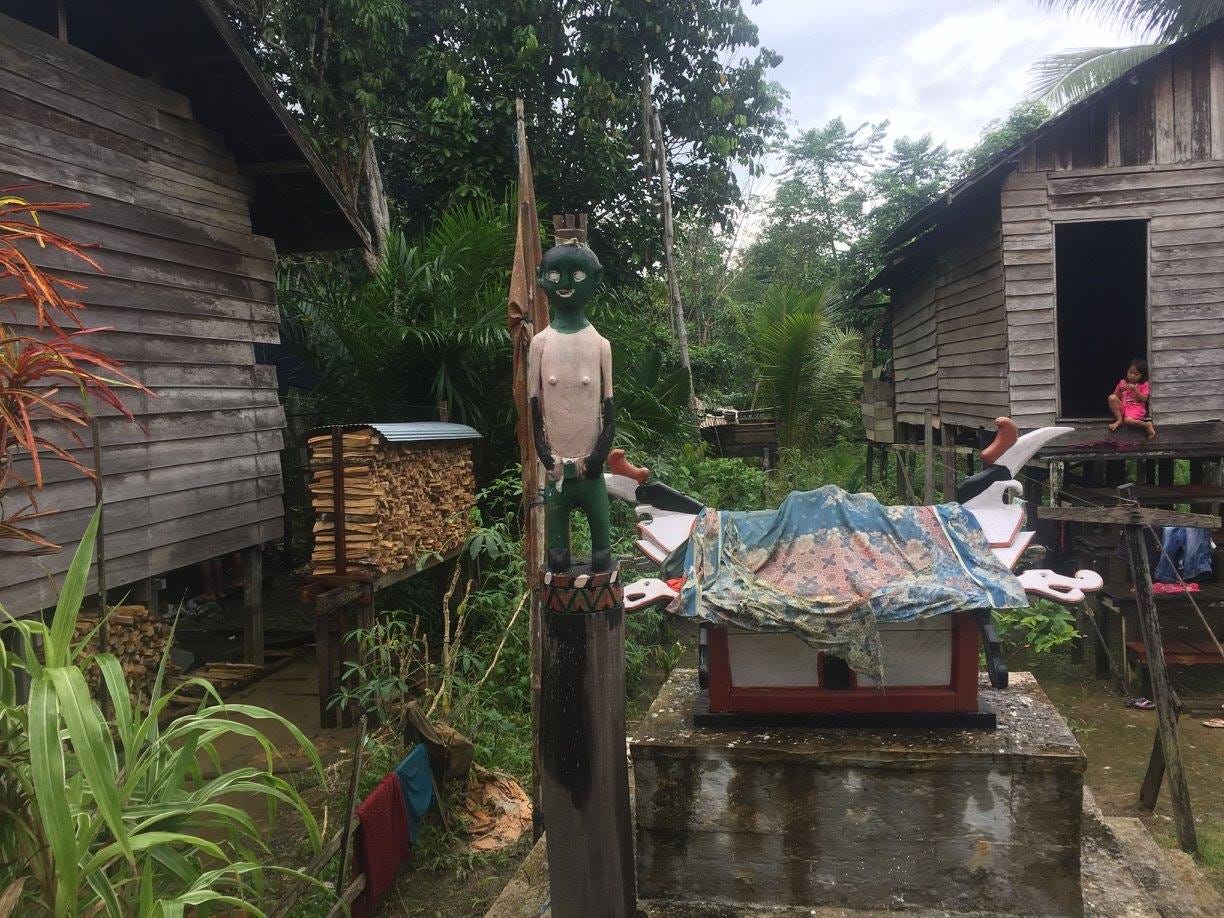
Rivers function like a road system on Borneo. It’s the world’s largest island, and it’s also home to a whole universe of tiny villages that remain largely closed off to the rest of the world. We used a chartered longboat to reach one such tiny village that didn’t have electricity and rarely received visitors. One local family had heard a bule - Bahasa slang for white person - was coming. They sent someone to meet our boat as it arrived because they didn’t want us to miss their ceremony.
We arrived in the middle of a Tiwah; a tradition of the Dayak people who call central Borneo home. Tiwah is held two years after someone dies. The village digs up the remaining bones of the deceased and puts them in a box, called a sandung. A final resting place for what once was—carefully gathered, gently contained, and sent on its way.
It was early afternoon and the party had been going for quite some time. Most of the grieving family was sauced on local hooch. I forget the name, but the concoction was some combination of fermented rice wine and coconut milk that tasted chalky and warm.
A key moment in the celebration requires an animal sacrifice so that the spirit of the departed loved one has someone to keep them company on their spiritual journey. By the time we arrived the remains of a pig rested beside the box of bones, along with token offerings of cigarettes, money and more of the homemade booze. A gentle breeze broke the jungle humidity as I asked the family to tell me about the person they were sending on.
It was a woman who had been sick and died at long last. But the Tiwah wasn’t a mournful affair. It had the spirit of a day-long open house, villagers coming and going, bringing their own offerings for the gathering and spending time reminiscing.
Death hung in the air but the spirit was hopeful. Not because death wasn’t real - but because hope gave them a way to live with it.
***
Hope is a dangerous thing.
Hope doesn’t just comfort us.
It changes what we’re willing to accept.
It is the resilience that holds when everything else gives way. It is the quiet certainty that something more is possible when all the evidence says otherwise.
In the tiwah, grieving people clinged to the hope that a member of their community would have a comfortable and enjoyable afterlife. That hope animated a whole village to pull out all the stops, to shift from focusing on their daily lives to reaching for something extraordinary for someone they knew and cared for.
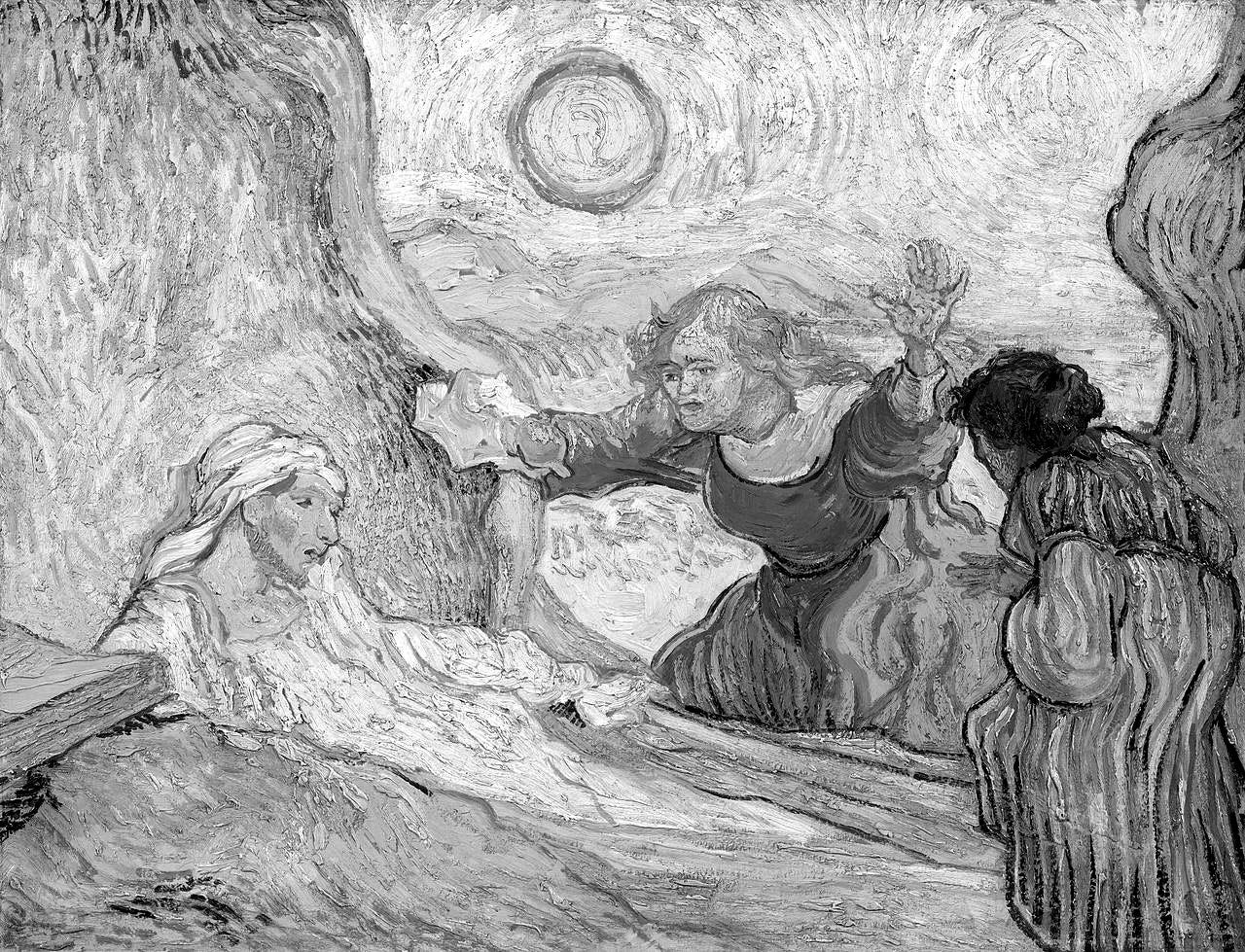
It’s the same kind of hope we can see in the story of Jesus and Lazarus. - Only here in this story, something shifts.
Hope doesn’t just help people cope with death. It stands up to it.
Like the people I sat with in Borneo, many in Jesus’ time believed the spirit lingered near the body for several days after death. Which means by the time Jesus arrives, Lazarus is not just dead— he is beyond hope.
So in the Lazarus story John’s Gospel presents a significant loss of hope. We don’t know why Jesus waited two more days before traveling to reach Mary and Martha but we do know the delay in reaching this family Jesus loved pushed the family beyond the point of hope, beyond the time when they thought life could be restored.
In Jesus’ world, death was not a gateway to something better.
Death was an enemy.
In ancient Israel, the prophet Ezekiel looked out on a valley of dry bones left by generations whose hope was claimed in the birthright of God’s chosen people. But Ezekiel’s people lived in exile. The people’s hope of a forever home was as elemental as the bones in their bodies.
As a people, the children of Israel endured valleys of death. As human beings, we all endure times when our hope has decayed and we’re left with the basic shell of life. In the system of life and death, how does hope survive?
Lazarus has not just “passed on”— he is gone into the place of no return. The kind of place where, in every human story, we would close the lid and let go. Martha’s admonishment—“Lord, if you had been here…”—isn’t sentimentality; it’s context. If Jesus had been there He would have been within the three-day window when hope remained. We get a literal sense of the loss of hope: “there will be a stench… he has been dead four days,” Martha told Him before he went to Lazarus’ tomb.
But Jesus makes the difference. Jesus shows the world death doesn’t have to be final. Resurrection is not just about what happens after we die. It is a claim that even the worst, most final, most feared reality is not ultimate anymore.
This is the tipping point in John’s Gospel. Even when it makes a Savior weep, hope is not lost. Not even in death. Because if death is not final, fear loses its leverage. If fear loses its leverage, systems built on fear begin to wobble. And when those systems wobble, people start to live differently.
That’s why hope becomes dangerous.
Hope becomes dangerous the moment death is no longer the worst thing that can happen.
Life and death are not the only systems built on fear. When Jesus calls us out of our fear of death, everything becomes changeable. We gain the power to live our lives. The game is not up - we can spend our life together differently.
We all have places like that.
Things we’ve already decided are over.
Stories we’ve closed up, sealed tight, and set aside.
Once we shake off the stench of death, once we refuse to define our lives by the worst possible outcomes, hope gets to work in the fertile soil of our hearts. A people rooted in hope who have faced the worst and still walked away from it are uncontrollable. Unmanageable. Unbound.
People rooted in hope are no longer held back by the strictures of power that keep the world from being the place of love and justice God wants for God’s people.
That was dangerous for the Romans ruling an Empire.
It is dangerous for the rulers of the world today.
Once people have felt the hope that their worst fears will not come true, they begin to live truly, and fully. They come alive, reborn in the power of love - a power so infectious, it brings the whole village. When love is shared enough, fear is pushed away. When fear is pushed out by love, whole worlds change.
Jesus lived in a world ruled by fear.
They had already tried to stone him.
They were already looking for a way to kill him.
Fear would have kept him in the wilderness, safely across the Jordan.
But love brought him back.
The change begins when Jesus hears that his friends need Him. Jesus valued a person over a system. Jesus knew that love was greater than the fear that would have kept Him away. Jesus knew that death would not have the final say in the life of His friend, just like death would not have the final say when the Empire finally succeeded in killing Him.
This is what resurrection means.
Resurrection is not just what happens after we die.
It is what happens when we begin to live in love instead of fear.
Coming to life in love threatens every understanding of order we’ve inherited. Resurrection means refusing to accept the power of the way things are in exchange for the power of what could be. It takes the assurance of love for us to choose to face up to those places where fear has us bound.
So how do we know when resurrection has taken hold of us?
It’s not when life gets easier.
It’s not when fear disappears.
Resurrection takes hold when we hear our friends need us and we act on it. Even if it means going to places where we must face danger.
Even if it means carrying convictions we’d rather leave buried.
Even if it means stepping into places we once avoided…loving people we once kept at a distance…refusing to accept that the worst thing is the last thing.
You might say we know it when we feel it in our bones.
Because we are called to move past the point where we’re convinced it can’t get any worse. We are called to move past the point of giving up. In following Jesus, we have to go to the greatest end in order to find a new beginning. That end is the place where Ezekiel saw there was a world beyond living in fear. That end is where Jesus knew the power of love could conquer even death. That end where we put the dry bones of our old ways in a box. In the Gospel, the bones we gave up for dead are called back to life. We put them in a box, and send them on their way.